

Bluetooth has become one of those smartphone specifications that is easy to ignore — until your earbuds cut out, your smartwatch takes too long to reconnect, your car refuses to pair, or a tracker cannot tell you exactly where your keys are. In 2026, the Bluetooth story is becoming more interesting again. Recent iPhones and Android flagships already deliver mature Bluetooth 5.x connectivity, while Bluetooth 6.0 introduces a major new capability: secure, fine-grained distance measurement through Channel Sounding.
That does not mean every phone advertised as “new” automatically supports Bluetooth 6.0, and it does not mean a higher version number instantly improves audio quality. The real experience depends on the phone’s radio hardware, operating system, supported profiles and codecs, and the accessory at the other end of the connection.
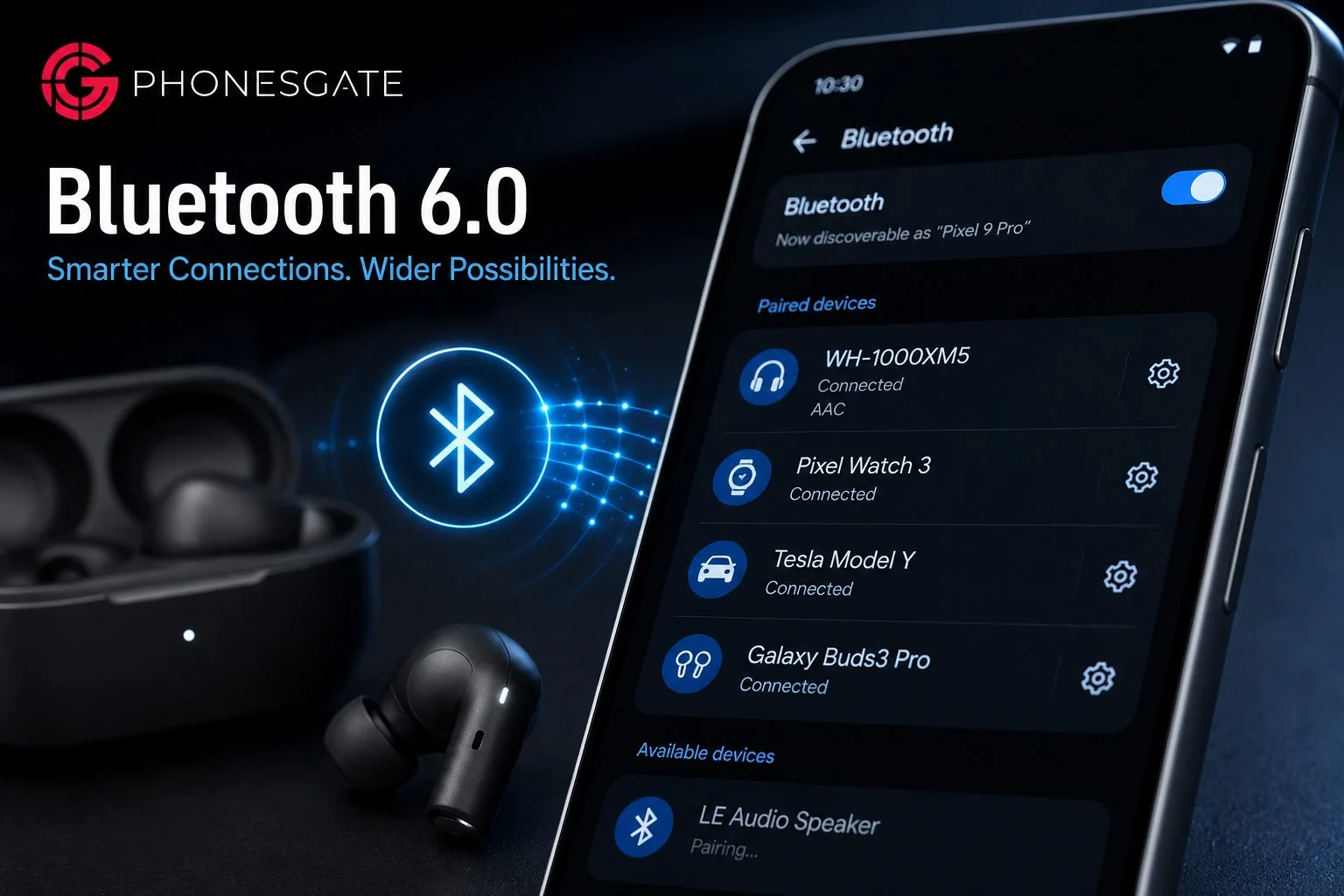
Why the Bluetooth version on a smartphone matters
The Bluetooth Core Specification defines the foundation that compatible devices can implement. Newer revisions can add capabilities around efficiency, reliability, advertising, positioning and security. But the version number is only the starting point. Manufacturers choose which optional features to implement, while Android and iOS expose different features to apps and accessories.
Key takeaway
Bluetooth 5.3, 5.4 and 6.0 explained for modern Android phones and iPhones, including audio, trackers, digital keys, Channel Sounding and what buyers should actually look for.
For buyers, four areas matter most: connection stability, power efficiency, audio capabilities and location-aware features. A phone can have excellent real-world Bluetooth performance without supporting every feature in the newest Core Specification.
Bluetooth 5.3: still highly relevant on premium phones
Bluetooth 5.3 remains common in modern smartphones and is more capable than the modest version-number change might suggest. It refined Bluetooth Low Energy behavior and helped manufacturers build more efficient, stable wireless implementations. For everyday users, that translates into the kind of improvements that are felt rather than seen: reliable earbuds, smoother wearable synchronization and less unnecessary radio activity.
7 min read
iPhone coverage from PhonesGATE. Published Aug 13, 2026.
Apple’s iPhone 16 and iPhone 16 Plus, for example, officially list Bluetooth 5.3. They combine it with Wi-Fi 7, Apple’s second-generation Ultra Wideband chip, Thread and NFC. This is a good example of why Bluetooth should not be judged in isolation. Apple can use several wireless technologies together depending on whether the task is audio, device discovery, precise finding, smart-home connectivity or payments.
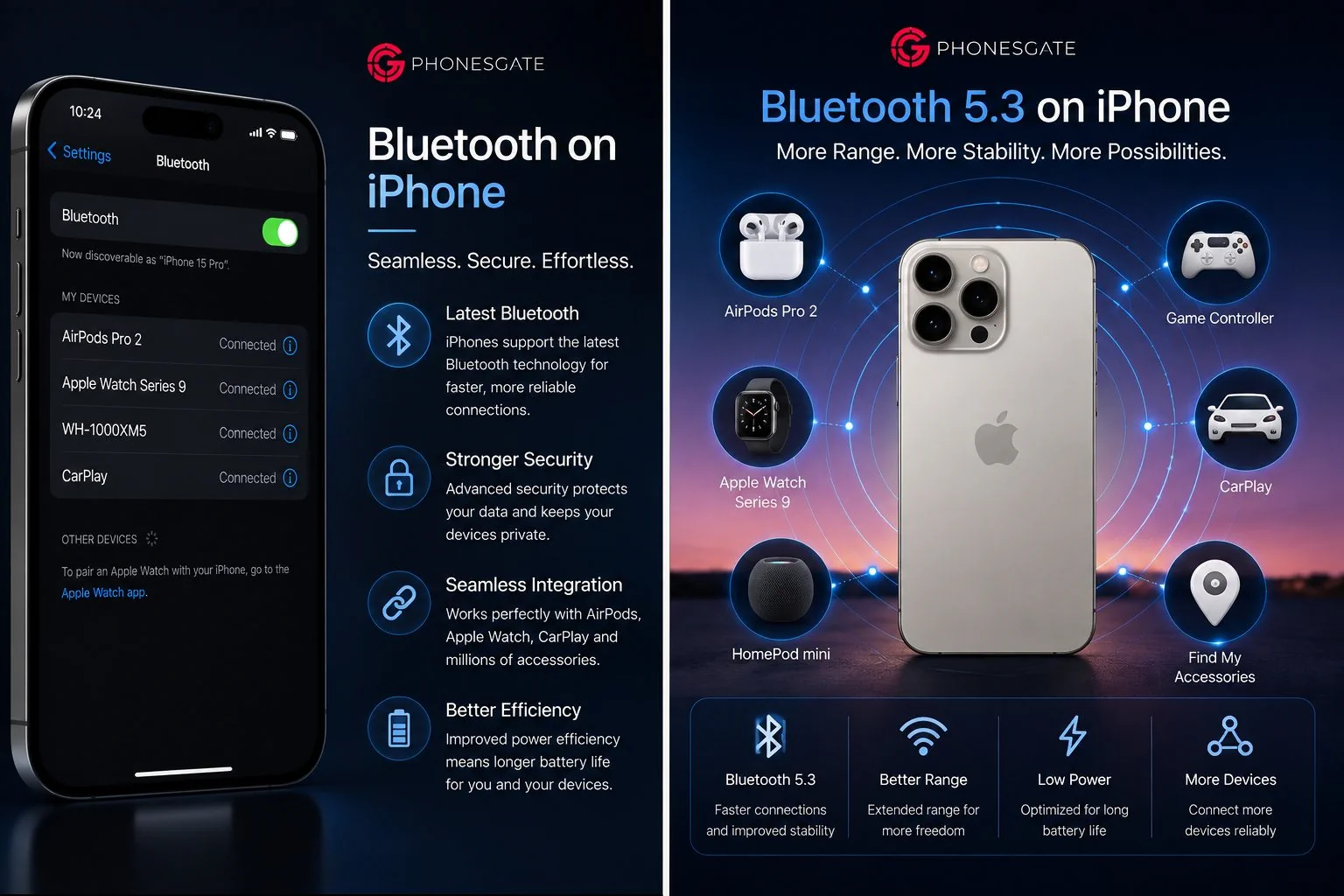
Bluetooth 5.4: an incremental step, not a reason to replace your phone
Bluetooth 5.4 continued the evolution of Bluetooth Low Energy, with changes aimed heavily at scalable, secure and efficient communication. Some newer Android hardware platforms support later Bluetooth 5.x revisions, but consumers should check the specification page for the exact regional device rather than assuming that every 2026 Android flagship uses the same Bluetooth revision.
For normal smartphone use, moving from a well-implemented Bluetooth 5.3 phone to a 5.4 phone is unlikely to transform how existing earbuds sound. Audio quality depends far more on the codec, the headphones, radio conditions, implementation quality and the source material. The newer specification is valuable, but it should be treated as part of the connectivity package rather than a headline reason to upgrade.
Bluetooth 6.0 is where the next major change begins
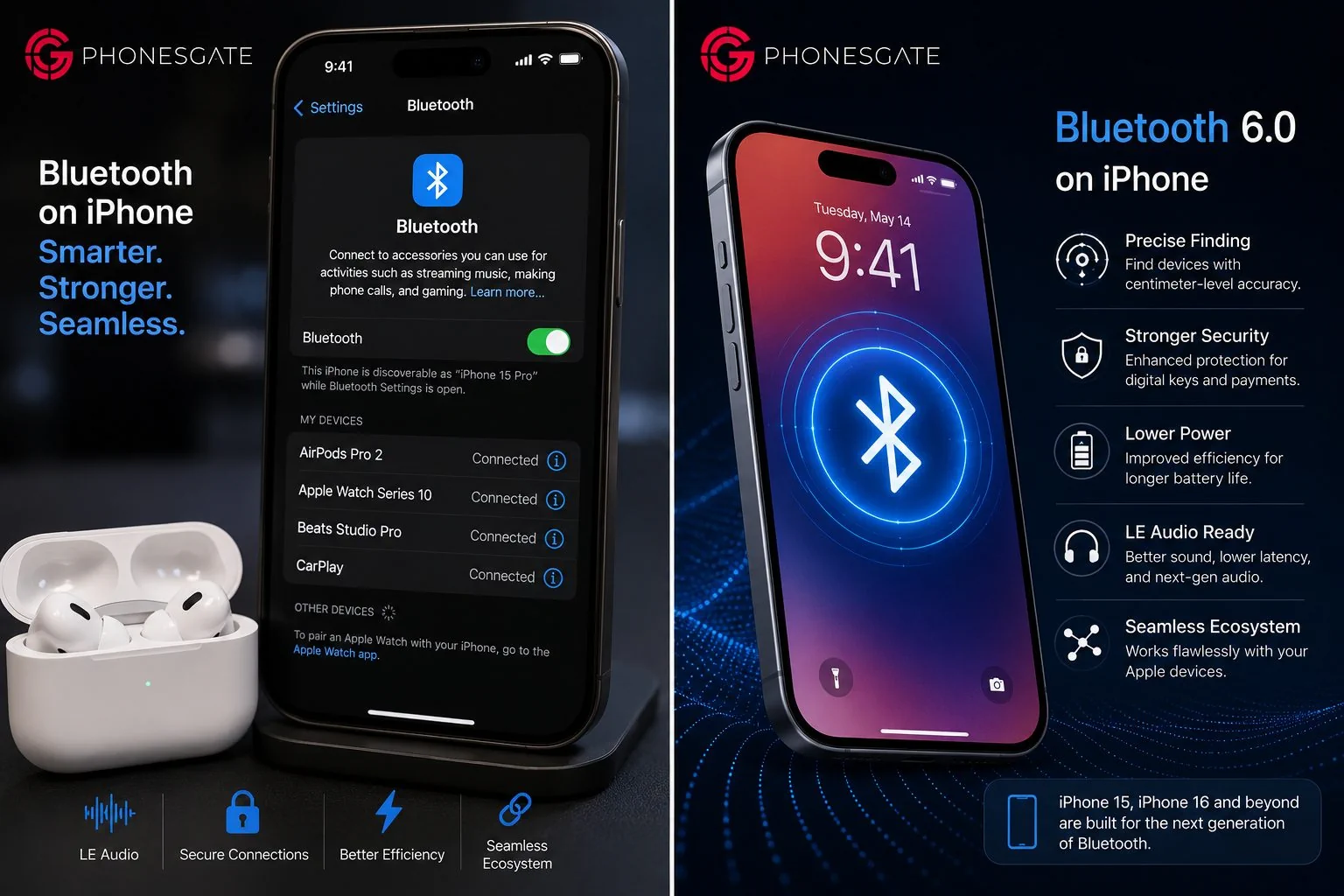
Bluetooth Core 6.0 introduces several technical changes, but the feature with the clearest smartphone potential is Bluetooth Channel Sounding. Instead of estimating distance mainly from received signal strength, compatible devices can use phase-based ranging and round-trip timing to calculate distance much more accurately.
The Bluetooth SIG describes Channel Sounding as a secure fine-ranging technology designed for true distance awareness. Early implementations can reach accuracy on the order of tens of centimeters. That opens the door to better item finding, more secure digital keys and accessories that understand not only that a phone is nearby, but approximately how far away it is.
Why Channel Sounding could matter for Android trackers
Item trackers are one of the clearest use cases. Today, Bluetooth can tell a phone that a compatible tracker is nearby, while some ecosystems use additional technologies such as Ultra Wideband for precision finding. Bluetooth Channel Sounding creates a standardized path for much more accurate ranging directly inside the Bluetooth ecosystem.
This could be particularly important for Android because the hardware landscape is so broad. If phones, tags and accessories adopt the same standardized ranging capability, manufacturers have a better foundation for interoperable “find my device” experiences without every company needing a completely proprietary distance-measurement system.
What Bluetooth 6.0 could mean for digital car keys
Digital keys are another major opportunity. A car does not merely need to know that an authorized smartphone is somewhere nearby; it needs confidence that the phone is genuinely close to the door or inside the cabin. Secure distance measurement can help reduce ambiguity and strengthen proximity-based authentication designs.
Bluetooth 6.0 does not magically make every digital key secure. The complete system still depends on cryptography, hardware, software and the vehicle implementation. But Channel Sounding gives device makers another standardized tool for building more trustworthy proximity experiences.
Does Bluetooth 6.0 automatically mean better wireless audio?
No. This is one of the most important misconceptions to avoid. A Bluetooth Core version and an audio codec are not the same thing. Moving to Bluetooth 6.0 does not automatically make music higher resolution or remove latency from every pair of headphones.
Wireless audio depends on the profiles and codecs supported by both devices. Bluetooth LE Audio, LC3 and ecosystem-specific codec implementations can have a much more direct impact on audio behavior than the Core version printed on a specification sheet. The weakest or least compatible side of the connection can also determine which features are actually used.
Android vs. iPhone: which platform has the Bluetooth advantage?
Android offers enormous hardware diversity. Depending on the manufacturer and chipset, buyers can find phones with different Bluetooth revisions and broad codec support. That flexibility is useful for enthusiasts who want to pair specific headphones or experiment with advanced audio options.
Apple takes a more controlled approach. The iPhone may not always advertise the highest Bluetooth version number first, but Apple tightly integrates the radio stack with iOS, AirPods, Apple Watch, Find My, Ultra Wideband and its accessory ecosystem. For many users, that integration matters more than the raw version number.
So there is no universal winner. Android can provide more choice, while iPhone emphasizes consistency across Apple hardware. The better platform depends on the accessories you actually own.
What to check before buying a new smartphone for Bluetooth
Do not buy a phone based only on “Bluetooth 5.4” or “Bluetooth 6.0” in a spec table. Check whether the manufacturer documents the features that matter to your use case. For wireless audio, investigate codec and LE Audio support. For trackers and digital keys, look for precise-ranging support and compatibility with the ecosystem you use. For smartwatches and health accessories, prioritize stable background connectivity and good power management.
It is also worth remembering that both sides of a connection matter. A Bluetooth 6.0 phone paired with an older accessory cannot force that accessory to gain Bluetooth 6.0 features.
PhonesGate take: Bluetooth is becoming important again
For several smartphone generations, Bluetooth upgrades were mostly invisible to mainstream buyers. The technology worked, version numbers increased, and most people continued pairing the same headphones and watches. Bluetooth 6.0 changes the conversation because accurate distance awareness can create features users can immediately understand.
The interesting future is not “Bluetooth 6.0 makes everything faster.” It is a phone that can identify how far away a compatible device is, a digital key system with better proximity awareness, and a tracker ecosystem that can become more precise without relying exclusively on proprietary ranging technologies.
For now, buyers should not reject a well-designed flagship simply because it uses Bluetooth 5.3 or 5.4. Those standards remain highly capable. But as Bluetooth 6.0 hardware becomes more common, Channel Sounding support is one specification worth watching closely.
Verdict
Bluetooth 5.3 and 5.4 are already mature enough for excellent smartphone connectivity. Bluetooth 6.0 is more exciting because it expands what Bluetooth can do, especially for precise finding and secure distance-aware interactions. The best buying strategy is to ignore version-number marketing on its own and evaluate the complete ecosystem: phone, operating system, headphones, wearables, trackers, car and smart-home devices.
That is where the next generation of Bluetooth will either become genuinely useful — or remain just another line on a specification sheet.