

Google may finally be ready to launch its own first-party item tracker — and if the latest Pixel Tag leak is accurate, Android users could soon have a much more direct answer to Apple’s AirTag. The rumored Google Pixel Tag has appeared in leaked imagery and retail information just days before the next Made by Google event, giving us the clearest indication yet that Google wants to put its own hardware at the center of the Android tracking ecosystem.
The idea is simple: attach a small tracker to keys, luggage, a backpack or another valuable item, then use Google’s Find Hub network to help locate it when it goes missing. Android already supports third-party Find Hub trackers, but a Pixel-branded tag would be different. It would give Google a first-party product that could be designed around Android, Pixel phones and Google’s own location network from day one.
At this stage, the Pixel Tag is still unannounced. Google has not published a final specification sheet, price or release date. The details below separate what has appeared in current leaks from what remains unknown.
Key takeaway
Google’s rumored Pixel Tag could give Android a first-party AirTag rival built around Find Hub. Here is what the latest leaks reveal — and what remains unknown before Google’s August 12 event.
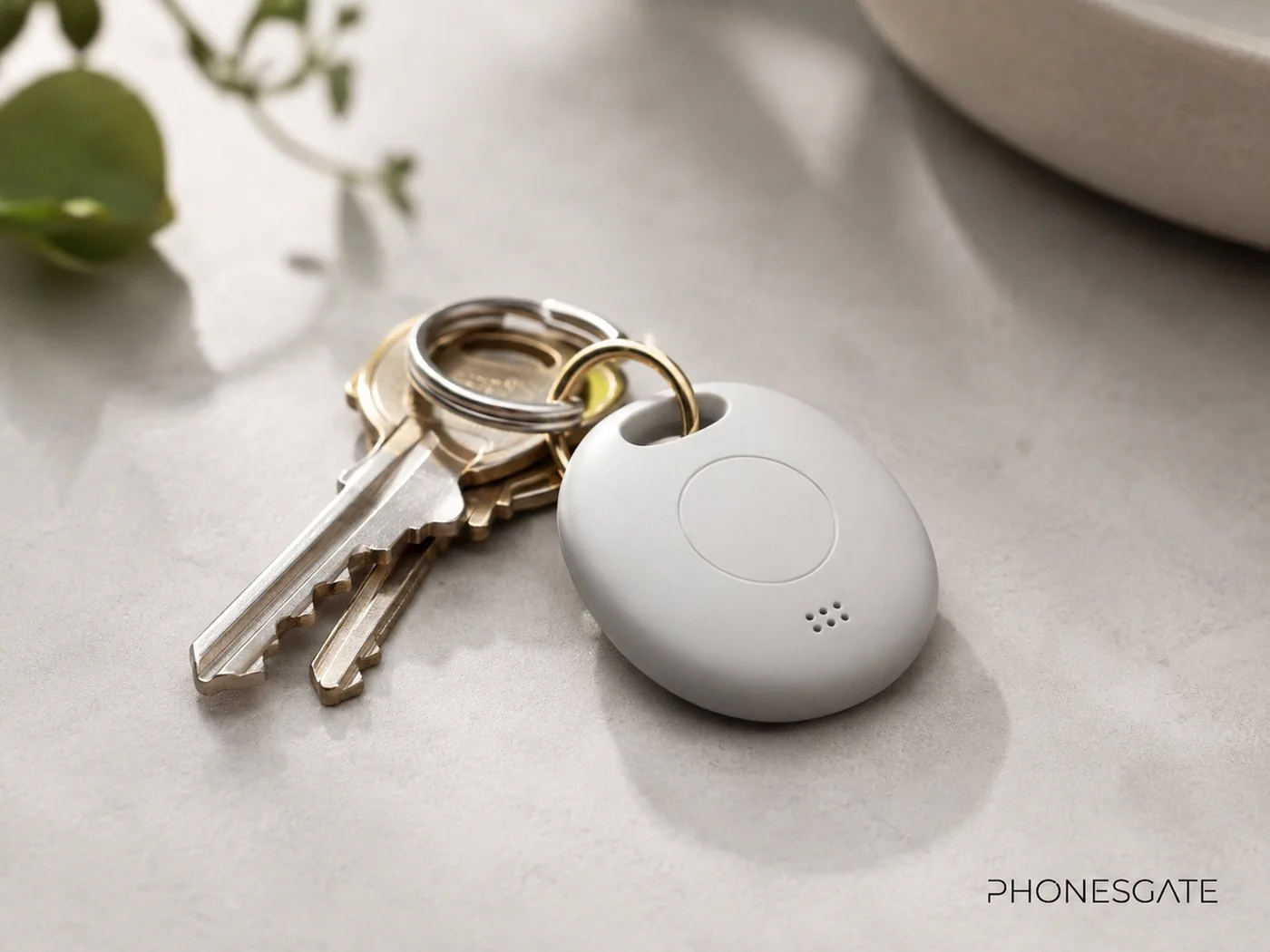
The Pixel Tag leak looks increasingly credible
The strongest recent reporting points to a product called Google Pixel Tag, described as a compact item tracker intended for Google’s Find Hub network. Leaked imagery shows a small oval-shaped device, while retail information has referenced model number GA12506 and a light color described as Fog Light.
That naming is important. Google has supported compatible trackers from other companies for some time, but “Pixel Tag” would clearly position this as Google’s own accessory rather than another generic Find Hub product.
7 min read
Google coverage from PhonesGate. Published Aug 10, 2026.
The timing also makes sense. Google’s next Made by Google hardware event is scheduled for August 12, 2026. The Pixel 11 family is expected to dominate the event, but a small ecosystem accessory such as Pixel Tag would fit naturally alongside new phones, watches and earbuds.
Find Hub could be the real advantage
The hardware itself may be simple, but the network behind it matters far more. Google’s Find Hub can use participating Android devices to help locate compatible trackers when they are away from their owner. In practice, the usefulness of a tracker depends heavily on how broad and responsive that network is.
A first-party Pixel Tag could give Google tighter control over setup, pairing, firmware updates, alerts and the overall tracking experience. It could also make Find Hub easier to explain to mainstream users who may currently associate item trackers mostly with Apple AirTag or Samsung Galaxy SmartTag.
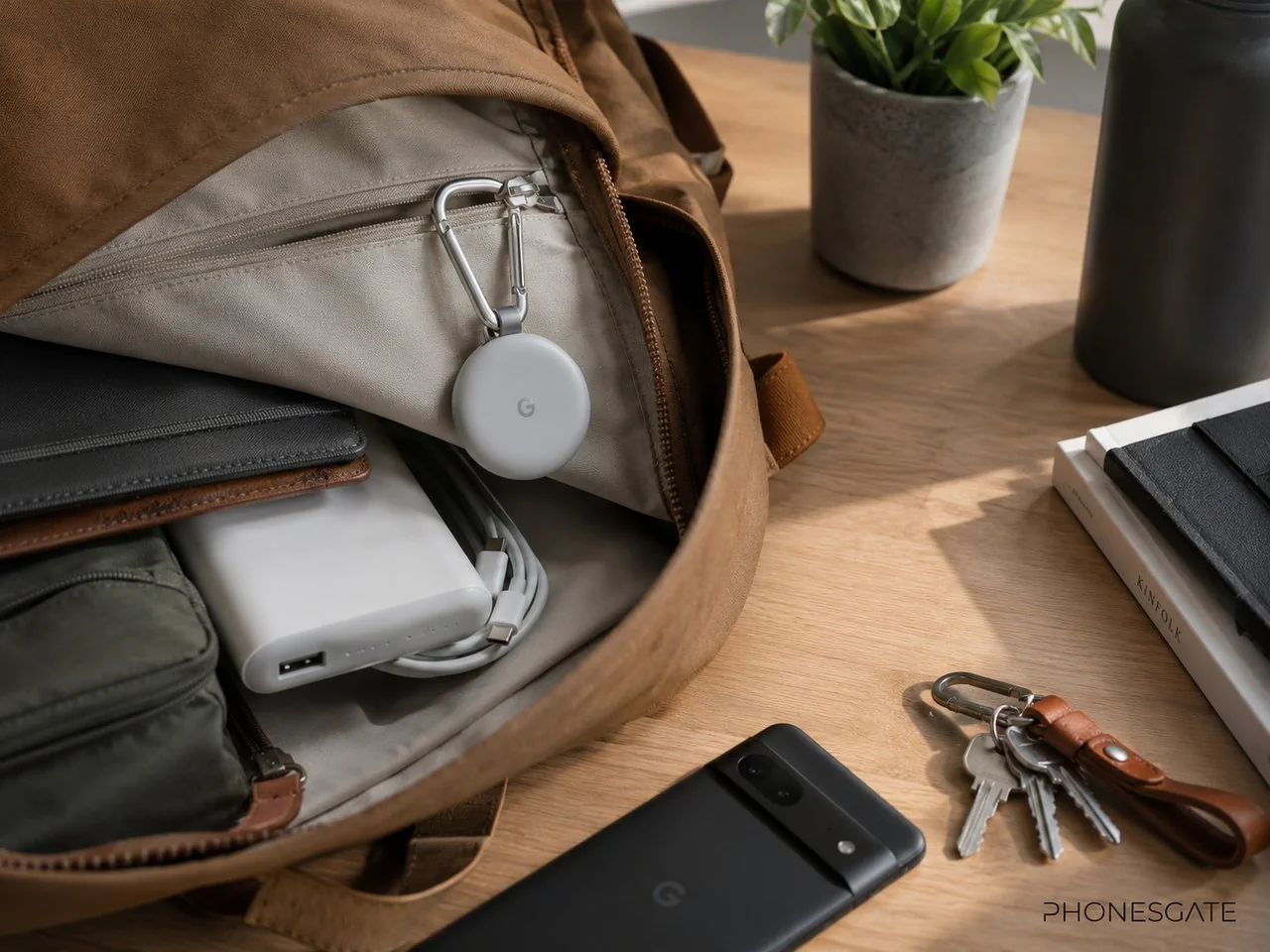
A built-in speaker appears likely
Current leaks describe the Pixel Tag as having a built-in speaker. That would allow the tracker to make a sound when it is nearby but hidden — under a sofa cushion, inside a backpack or somewhere else that is difficult to spot visually.
This is one of the most practical tracker features because GPS-like map positioning only gets you so far indoors. Once you know the item is nearby, an audible alert can make the final search much faster.
What we still do not know: UWB and the battery
Two of the biggest technical questions remain unanswered.
First is Ultra-Wideband (UWB). UWB can enable much more precise close-range direction finding on supported hardware. Current Pixel Tag leaks have not established whether Google’s tracker will include it, so any claim about precision finding should remain speculative for now.
Second is the battery. It is not yet clear whether Pixel Tag would use a replaceable coin-cell battery or a rechargeable design. Both approaches have advantages: replaceable cells can last a long time without charging, while rechargeable trackers can reduce disposable battery use.
Until Google announces the product, both details should be treated as open questions rather than expected specifications.

Google needs to get privacy and unwanted-tracking alerts right
Item trackers are useful, but the same technology can be abused for unwanted tracking. That makes privacy protections a core part of the product rather than an optional extra.
If Google launches Pixel Tag, the most important software experience will not just be finding lost belongings. It will also need reliable alerts when an unknown tracker appears to be moving with someone who does not own it, along with clear instructions for locating and disabling that tracker.
Google and Apple have already worked on cross-platform unwanted-tracker detection standards, so a first-party Google tracker would arrive in a market where users increasingly expect these protections by default.
Could Pixel Tag finally make Android tracking feel first-party?
That is the bigger story here. Android does not lack Bluetooth trackers, but the ecosystem has remained more fragmented than Apple’s AirTag experience. A Pixel Tag could become the product Google uses to make Find Hub feel like a complete consumer platform rather than simply a network supported by other brands.
For Pixel owners, setup could potentially become almost invisible: bring the tag close to the phone, pair it, name the item and forget about it until it is needed. That is the level of simplicity Google needs to aim for.

PhonesGate take
Pixel Tag could be one of Google’s smallest hardware launches in 2026, but it may have an outsized impact on the Android ecosystem. Google already has Find Hub. What it has lacked is a recognizable first-party tracker that demonstrates exactly how the network is supposed to work.
If Pixel Tag launches at a competitive price, pairs instantly with Android and offers strong unwanted-tracking protections, it could become an easy accessory recommendation for Pixel users and a credible alternative to AirTag for the wider Android market.
The biggest unknown is whether Google will go beyond basic Bluetooth tracking with UWB or another precision-finding technology. That detail could determine whether Pixel Tag is simply a well-integrated tracker or a genuinely premium AirTag competitor.
Final verdict
Google Pixel Tag has the potential to become the first truly obvious item tracker for many Android users. The key advantage would not be the shape of the tracker itself, but Google’s ability to combine first-party hardware with Find Hub, simple Pixel pairing and strong cross-platform unwanted-tracking protections.
There are still important unanswered questions — especially UWB support, battery design, final pricing and whether Google will actually unveil it on August 12. Until those details are official, Pixel Tag remains a promising leak rather than a finished recommendation. But if Google gets the price and precision-finding experience right, this could finally give Android users a credible, easy-to-understand AirTag alternative.
What to watch on August 12
- Official confirmation: whether Pixel Tag actually appears at the Made by Google event.
- Price: whether Google positions it near AirTag pricing or undercuts it.
- Find Hub integration: setup, offline finding and nearby-item controls.
- Precision finding: whether UWB is included.
- Battery: rechargeable or replaceable.
- Accessories: whether the tracker needs a separate holder for keys and bags.
Frequently asked questions
Is Google Pixel Tag official?
Not yet. Pixel Tag has appeared in credible leaks and retail information, but Google has not formally announced the product as of August 10, 2026.
What will Google Pixel Tag be used for?
It is expected to be an item tracker for keys, luggage, backpacks and other belongings, using Google’s Find Hub network to help users locate them.
Will Pixel Tag have a speaker?
Current leaked information points to a built-in speaker for audible locating, although final specifications still need Google’s confirmation.
Will Pixel Tag support UWB?
That remains unknown. Current leaks have not confirmed Ultra-Wideband support.
When could Google announce Pixel Tag?
The most likely opportunity is Google’s August 12 Made by Google event, but the company has not confirmed that Pixel Tag will be part of the event.