

Smartphone camera upgrades have become predictable. Every year we get larger sensors, more megapixels, stronger AI processing and longer zoom claims. The Huawei Pura 80 Ultra takes a different approach. Its most interesting feature is not simply a bigger sensor or another periscope lens. Huawei has built a Switchable Dual Telephoto Camera that can deliver two native optical zoom positions — 3.7x and 9.4x — inside one telephoto system.
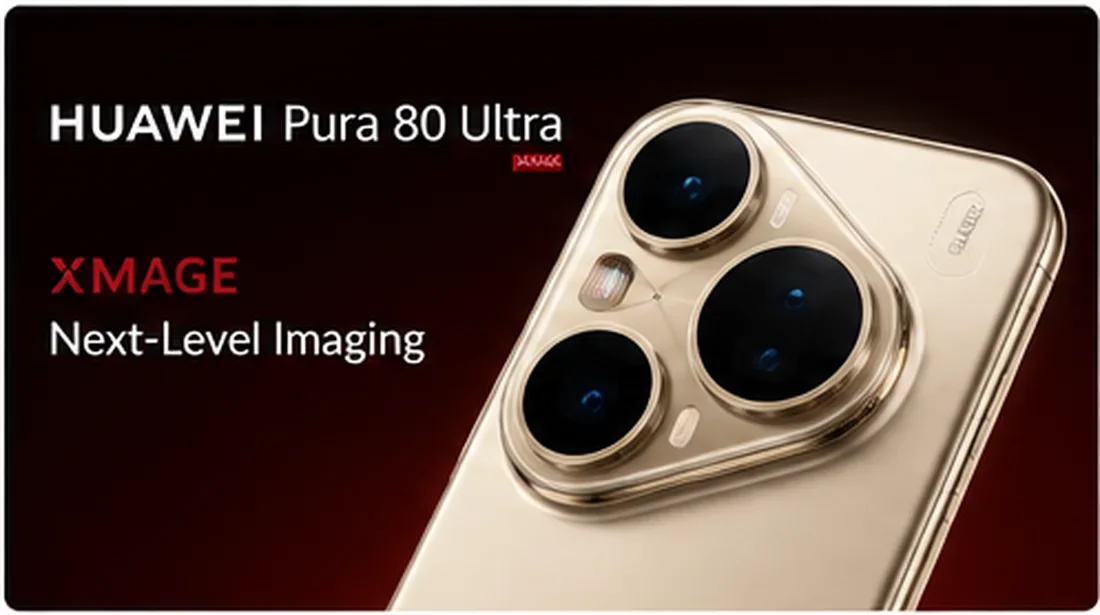
That makes the Pura 80 Ultra one of the most technically unusual camera phones on the market. Huawei pairs the switchable telephoto system with a 50MP 1-inch Ultra Lighting HDR main camera featuring a physically adjustable F1.6–F4.0 aperture, a 40MP ultra-wide and an Ultra Chroma sensor with 1.5 million spectral channels for improved color analysis.
This is not a hands-on review. PhonesGate is looking at the architecture itself: what Huawei officially built, why it is different, and what trade-offs this design is trying to solve.
Key takeaway
Huawei Pura 80 Ultra combines a 1-inch 50MP main camera with a mechanically switchable dual-telephoto system offering 3.7x and 9.4x optical zoom. Here is why that camera architecture matters more than another megapixel race.
The camera module is the real story
Most flagship phones use separate sensors and separate optical paths for each telephoto focal length. Huawei’s Pura 80 Ultra is different. The phone includes a 50MP telephoto camera at approximately 3.7x optical zoom and a 12.5MP telephoto camera at approximately 9.4x optical zoom, using a mechanically switchable optical system inside the camera assembly.
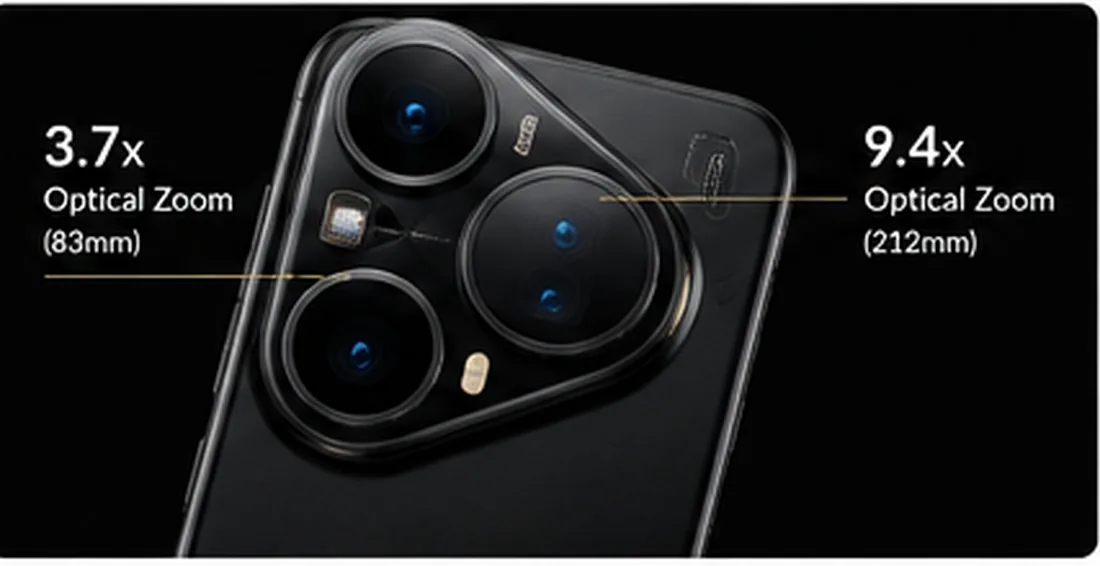
Huawei lists the equivalent focal lengths at roughly 83mm and 212mm. That is a useful pairing because the two focal lengths serve very different photographic purposes. Around 3.7x works well for portraits, details and medium-distance subjects. The 9.4x position is built for distant architecture, stage photography, wildlife-style framing and scenes where digital cropping would normally destroy detail.
8 min read
PhonesGate coverage from PhonesGate. Published Sep 2, 2026.
The advantage is not simply “more zoom.” It is having two strong optical positions that cover two distinct use cases. That gives the camera system more flexibility before software-based zoom has to take over.
Why the 3.7x lens may be more useful than the headline 9.4x
Long zoom numbers get the marketing attention, but a moderate telephoto is often more useful day to day. An 83mm-equivalent view creates natural perspective compression without forcing the photographer to stand extremely far away from the subject. It is ideal for portraits because faces look less distorted than they can with a wide-angle lens.
Huawei explicitly promotes the 3.7x mode for portraits and medium-distance scenes. This is important because it means the telephoto system is not only designed for showing off distant objects. It is built to contribute to normal photography as well.
The 9.4x position then becomes the specialist tool. At roughly 212mm equivalent, the phone can isolate distant subjects and create stronger visual compression. That is the kind of focal length that changes how a user can frame a skyline, concert stage or architectural detail.
The 1-inch main camera gives Huawei a second advantage
The main camera is equally ambitious. Huawei uses a 50MP 1-inch Ultra Lighting HDR sensor with optical image stabilization and a physical F1.6–F4.0 variable aperture. A large sensor can collect more light, but the adjustable aperture gives the camera additional control over exposure and depth of field.
At F1.6, the lens can maximize light capture for darker scenes. A narrower aperture can help control highlights, improve depth of field and reduce the need for aggressive computational processing in bright conditions. That kind of hardware-level control is increasingly rare in smartphones, where fixed apertures are much more common.
Huawei says its Ultra Lighting HDR system can deliver up to 16 EV of dynamic range under its laboratory methodology. As with any manufacturer claim, independent testing matters more than the headline number. But the combination of a 1-inch sensor, OIS and a physical aperture is technically meaningful even without relying on the marketing figure.
Huawei is treating color as a hardware problem too
The Pura 80 Ultra also includes an Ultra Chroma Camera with 1.5 million spectral channels. Instead of relying only on the RGB data from the main camera sensors, Huawei uses dedicated spectral information to improve color measurement across the camera system.
This matters because color accuracy can become inconsistent when switching between different lenses. A main camera, ultra-wide and telephoto may all use different sensors and optics. If their color response differs, the same scene can suddenly look warmer, cooler or more saturated when the user changes zoom level.
Huawei’s approach is to provide more color information to the imaging pipeline so the cameras can be matched more consistently. The real success of that system still depends on processing, but the hardware concept is more sophisticated than simply applying the same filter to every lens.
It still has a full flagship display and hardware package
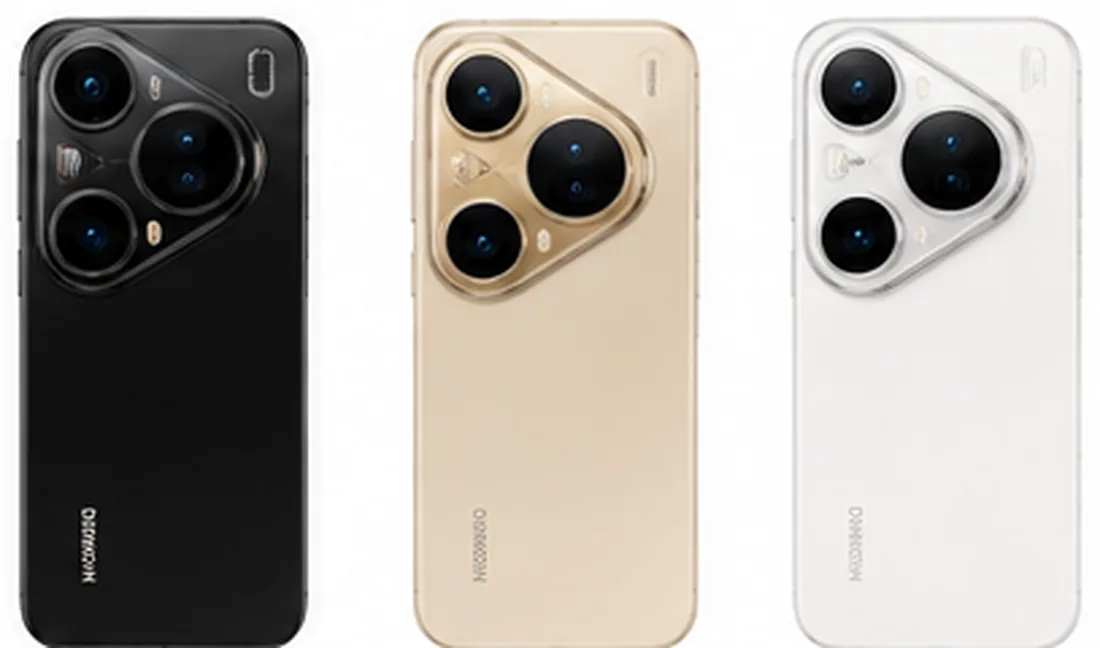
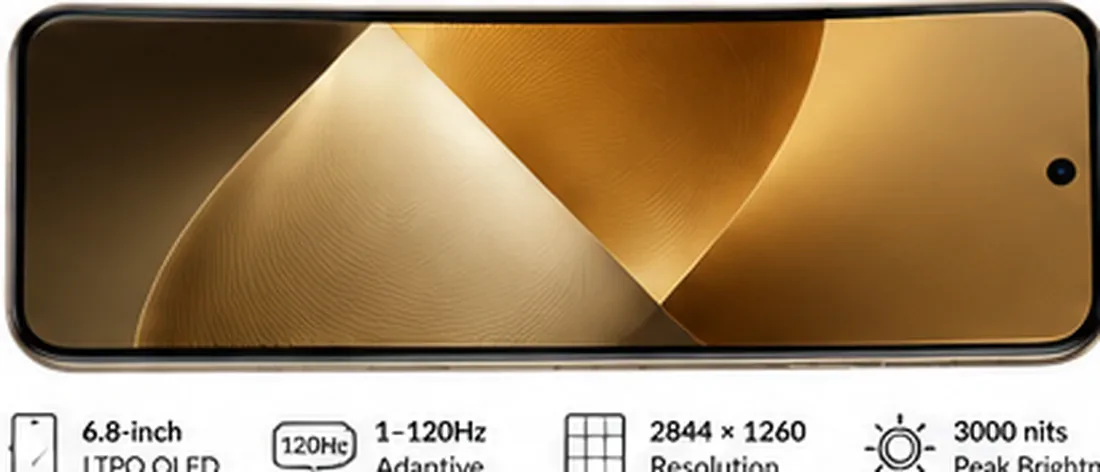
The camera system gets most of the attention, but Huawei has not built the Pura 80 Ultra as a camera attached to a mid-range phone. Official specifications list a 6.8-inch LTPO OLED display with a 1–120Hz adaptive refresh rate, 2848 × 1276 resolution and 1.07 billion colors.
The phone is powered by the Kirin 9020 and is available with 16GB RAM and 512GB storage in the global specification published by Huawei. Regional configurations can vary, so buyers should always check the local product page before purchasing.
Huawei also gives the Pura 80 Ultra IP68/IP69 protection and second-generation Crystal Armour Kunlun Glass. These are important details for a phone whose camera hardware makes it an expensive device to repair or replace.
Battery and charging are flagship-level too
Huawei lists a 5,170mAh rated battery for the global Pura 80 Ultra. Wired charging reaches up to 100W HUAWEI SuperCharge, while compatible Huawei wireless hardware supports up to 80W wireless SuperCharge.
Those charging speeds are particularly useful on a camera-focused phone. High-brightness outdoor shooting, 4K video, image processing and long zoom sessions can consume significant power. Fast top-ups reduce the need to treat a photography session like a battery-management exercise.
Huawei notes that maximum wired and wireless speeds require compatible Huawei chargers, cables and wireless stands. Actual charging performance will also vary with temperature and usage conditions.
The biggest limitation is not the hardware
The Pura 80 Ultra’s camera system is technically impressive, but the buying decision is more complicated outside China. Global versions use Huawei’s software ecosystem, and app availability can differ significantly from a conventional Google-certified Android flagship.
That does not make the hardware less interesting, but it changes who the phone is for. A photography enthusiast willing to adapt to Huawei’s ecosystem may see the camera system as worth the trade-off. A user deeply dependent on specific Google services or apps should verify compatibility before buying.
This is one reason camera specifications alone cannot determine whether a device is the best phone for someone. The Pura 80 Ultra may be one of the most ambitious mobile cameras available, while still not being the easiest recommendation for every global buyer.
Why the switchable telephoto system matters for the industry
The smartphone industry has spent years adding more cameras. Huawei’s system points toward a different future: making each camera module more flexible. If manufacturers can create optical systems that cover multiple useful focal lengths without simply adding more large sensors to the back of the phone, camera islands could eventually become more efficient.
Mechanical complexity is the obvious downside. Moving optical components create additional engineering challenges around durability, calibration and manufacturing. Huawei’s solution therefore needs long-term reliability as much as it needs impressive image quality.
But that is exactly why the design is worth paying attention to. It is an actual hardware experiment. It tries to solve a physical photography problem rather than simply increasing a specification number.
PhonesGate take
The Pura 80 Ultra’s best feature is not 100x digital zoom. It is the fact that Huawei is still treating smartphone photography as an optical engineering problem.
The 1-inch variable-aperture main camera is already unusual. Combining it with native 3.7x and 9.4x telephoto positions makes the phone even more interesting. The result is a camera system designed around distinct photographic focal lengths instead of a single sensor followed by increasingly aggressive digital cropping.
That does not automatically make every photo better than the best Samsung, Apple, Xiaomi or vivo flagship. Image processing, autofocus, motion capture and software consistency still decide many real-world results. But the Pura 80 Ultra brings something more valuable than another spec bump: a genuinely different camera architecture.
For PhonesGate, that is what makes this Huawei worth covering. The smartphone camera race becomes much more interesting when manufacturers compete through optics and engineering rather than only megapixels.
Sources
Image note: visuals used in this article are PhonesGate editorial illustrations inspired by Huawei’s official product design. They are not presented as Huawei press photography or as camera samples captured by the device.