

Huawei has spent years treating smartphone photography as an optical-engineering problem rather than a megapixel contest. With the HUAWEI Pura 90s Pro Max, the company is doing something that sounds almost backwards at first: instead of putting the highest-resolution sensor behind the main camera, Huawei has placed a 200MP ultra-large sensor behind the telephoto camera.
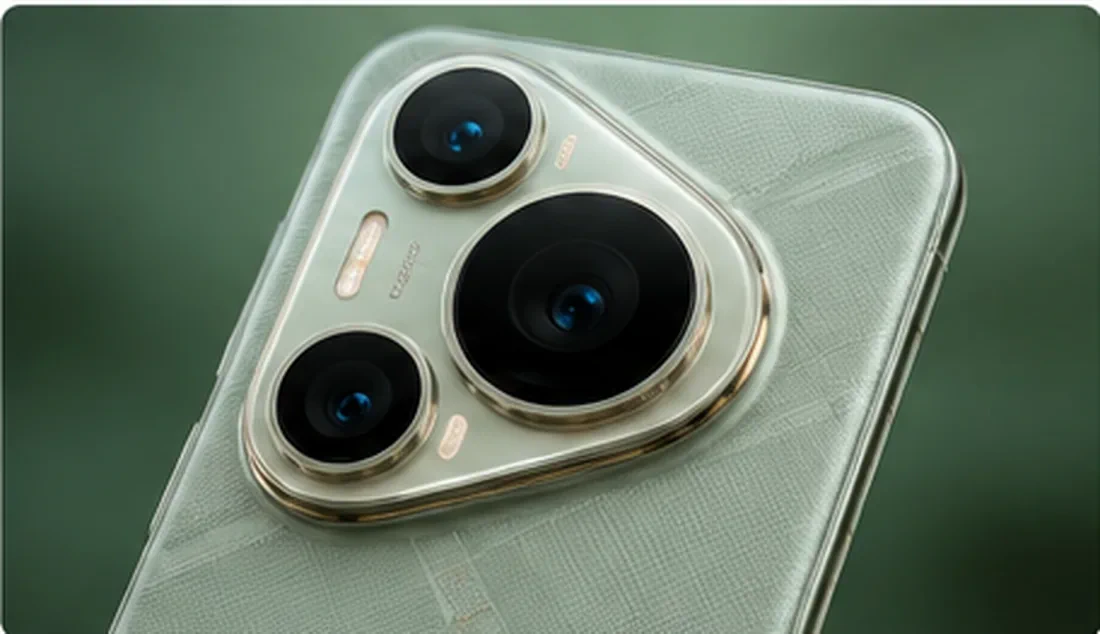
The idea is more interesting than another headline number. Telephoto photography is exactly where extra sensor resolution can be useful because distant subjects often need additional cropping and computational reconstruction. Huawei combines the 200MP sensor with 4x optical zoom, optical image stabilization and up to 100x digital zoom. The company also promotes 20x telephoto video, making long-range video a major part of the Pura 90s Pro Max camera story.
This is not a PhonesGate hands-on review. It is a camera-focused analysis based on Huawei’s official global product pages and specifications. The goal is to understand what the hardware is designed to achieve, where the 200MP telephoto concept makes sense and which parts still need independent real-world testing.
Key takeaway
Huawei Pura 90s Pro Max puts a 200MP ultra-large-sensor telephoto camera at the center of its flagship strategy, combining 4x optical zoom, 20x telephoto video, a variable-aperture 50MP main camera and Kirin 9030S.
A 200MP sensor where resolution may actually matter
Huawei officially lists the Pura 90s Pro Max with a 200MP Ultra Large Sensor Telephoto Camera featuring an F2.6 aperture and OIS. The telephoto system provides approximately 4x optical zoom; Huawei lists the telephoto equivalent focal length at around 89mm.
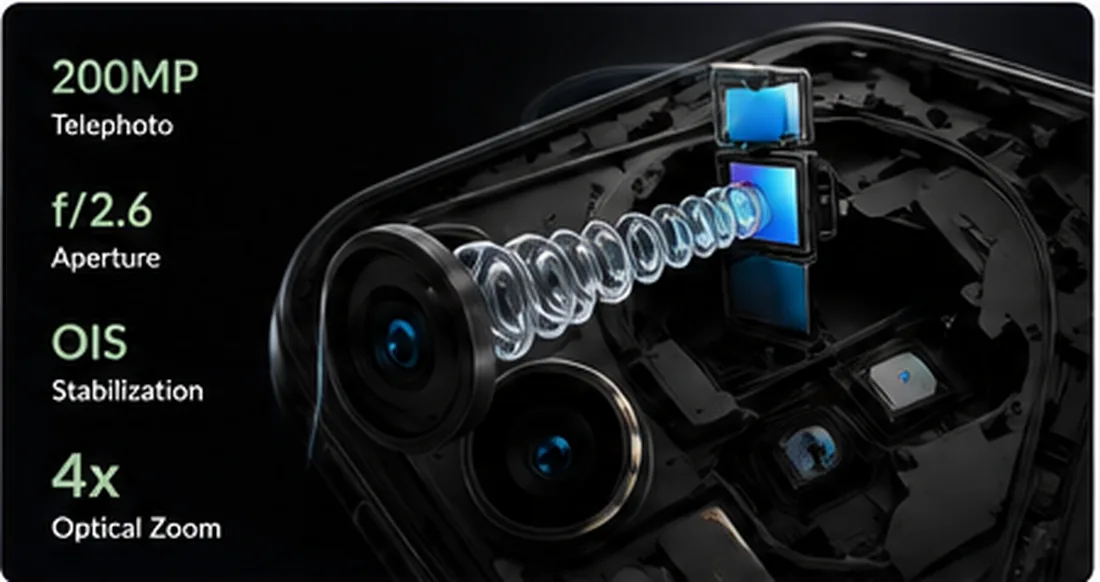
Why put 200 megapixels behind a telephoto lens? The simplest answer is cropping flexibility. A long-range camera often has to cover focal lengths beyond its native optical position. Once the phone moves beyond 4x, software begins using sensor crop, multi-frame processing and computational enhancement. Starting with a very high-resolution sensor gives the imaging pipeline more native data to work with.
8 min read
PhonesGate coverage from PhonesGate. Published Sep 4, 2026.
That does not mean a 200MP image automatically contains 200MP of useful detail. Lens resolution, sensor size, light levels, stabilization and processing all matter. In low light, phones often combine multiple pixels or use lower-resolution modes to improve signal quality. But the architecture makes sense: if a manufacturer is going to spend its pixel budget somewhere, long-range photography is one of the places where it can provide a practical advantage.
4x optical is the foundation; 20x video is the more unusual trick
The official zoom specification is 4x optical and up to 100x digital. Huawei’s feature page also specifically highlights 20x telephoto video. That is important because video is more difficult than still photography. A still image can use longer multi-frame processing, while video has to maintain focus, stabilization, exposure and detail continuously.
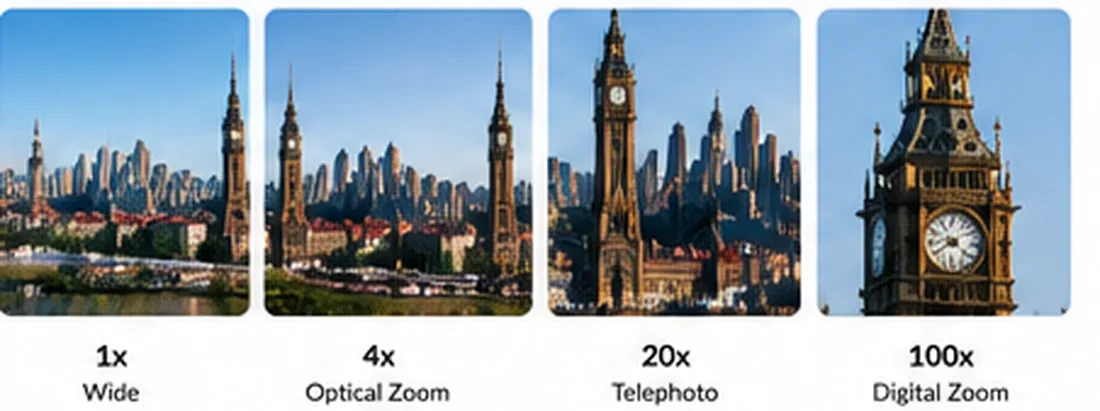
That makes the 20x video mode one of the most interesting features to test after launch. Long zoom magnifies every movement from the photographer’s hands, so optical stabilization and electronic processing have to work extremely hard. If Huawei can keep distant subjects stable and detailed in video, the feature could be genuinely useful for concerts, wildlife, architecture and sporting events.
Huawei’s marketing examples show birds and distant details as use cases, but the final judgment needs independent footage. High zoom can look impressive in bright daylight and fall apart quickly after sunset. Sensor resolution cannot replace photons.
The 50MP main camera still uses real variable aperture
The telephoto camera gets the headline, but Huawei has not neglected the main sensor. The Pura 90s Pro Max uses a 50MP Ultra Lighting HDR main camera with OIS and a physical F1.4–F4.0 variable aperture.

This is a more meaningful hardware feature than it may sound. At F1.4, the lens can gather more light for darker scenes and use shallower depth of field. In brighter conditions, narrowing the aperture can control exposure and increase depth of field. Instead of simulating every photographic effect through software, Huawei gives the camera another physical variable to work with.
Variable aperture can also help with close-up photography. Large smartphone sensors and wide apertures naturally produce shallow focus, which can leave parts of a nearby subject blurred. A smaller physical aperture can keep more of the scene sharp without forcing the phone to switch to a weaker camera.
True-to-Colour Camera 2.0 targets consistency between lenses
The rear system also includes a 40MP ultra-wide camera and Huawei’s True-to-Colour Camera 2.0. The latter is designed to help the imaging pipeline reproduce color more consistently across different scenes and camera modules.
Color consistency is an underrated camera problem. A main camera and telephoto can use different sensors, apertures and optics. Without careful calibration, skin tones, white balance and saturation can visibly shift as the user moves between zoom levels. Huawei’s approach is to treat color measurement as its own part of the camera system rather than leaving every lens to interpret the scene independently.
The display is built for viewing those photos
The Pura 90s Pro Max uses a 6.9-inch LTPO OLED with an adaptive 1–120Hz refresh rate and a resolution of 2880 × 1308 pixels. Huawei lists 1.07 billion colors and high-frequency PWM dimming.
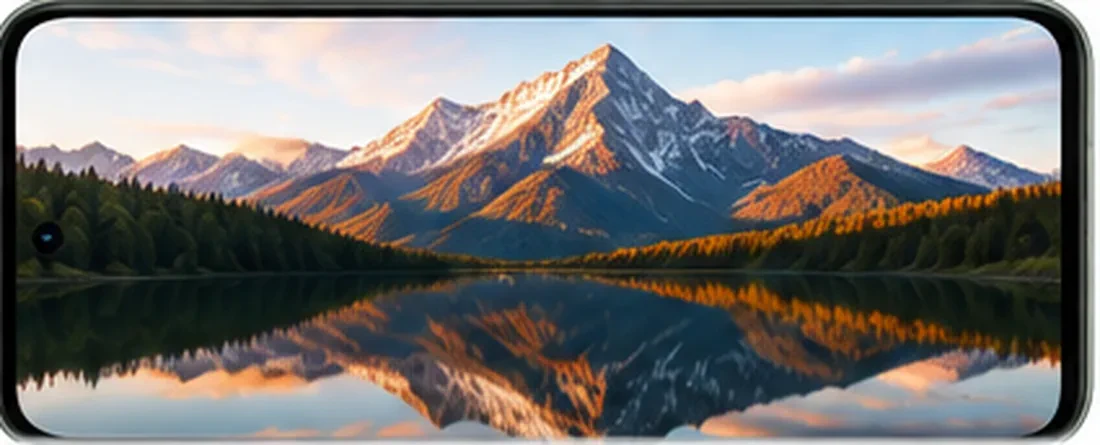
A camera-focused flagship needs a strong display because the screen is effectively the viewfinder and the first editing monitor. Adaptive LTPO technology can reduce refresh rate when the image is static and increase it during scrolling or supported animations, balancing smoothness with efficiency.
Kirin 9030S and EMUI 16 handle the processing side
Huawei’s global specifications list the Kirin 9030S octa-core processor, 12GB RAM and either 256GB or 512GB storage depending on market. The global software platform is EMUI 16.
For a camera system like this, the chipset matters because modern smartphone photography is never purely optical. Every shutter press can involve HDR merging, noise reduction, subject recognition, color mapping, sharpening and lens correction. High-resolution telephoto capture adds even more data for the imaging pipeline to process.
Battery capacity genuinely varies by region
Huawei’s own regional specification pages show an unusual battery distinction. For non-EU markets, Huawei lists a 6,000mAh typical capacity and 5,850mAh rated capacity. For EU variants, the company lists a 5,270mAh rated capacity. Huawei does not present those two figures using exactly the same “typical” versus “rated” measurement, so they should not be compared as if they were identical metrics.
The important takeaway is that battery configuration can differ by region. Anyone considering an imported Pura 90s Pro Max should check the exact model and local specification page rather than assuming every version has the same cell.
Wired charging reaches up to 100W HUAWEI SuperCharge with the compatible Huawei charger and cable. Huawei’s global pages also list wireless SuperCharge support, with wireless chargers sold separately. Exact wireless charging power should be checked against the specific regional model.
IP68 and IP69 make sense on a photography flagship
Huawei rates the global model for IP68 and IP69 resistance under controlled laboratory conditions. The IP68 test includes static freshwater at up to 2 meters for up to 30 minutes, while IP69 covers high-temperature, high-pressure spray testing under a defined procedure.
This does not make the phone permanently waterproof. Huawei explicitly warns that resistance can decline with normal wear and that liquid damage is not necessarily covered by warranty. Still, strong ingress protection is valuable on a device likely to be used outdoors for photography and video.
Is 200MP telephoto better than a second zoom camera?
This is where Huawei’s strategy becomes interesting. Some competitors use two dedicated telephoto cameras: one for medium zoom and one for long zoom. Huawei instead puts enormous resolution behind a single 4x telephoto sensor and asks computational photography to extend that focal range.
There are advantages to both approaches. Two optical telephoto modules can provide native focal-length coverage at more than one zoom level. A very high-resolution single telephoto can potentially simplify the camera stack while giving the processor more pixels for lossless or near-lossless crops around the native focal length.
The quality of Huawei’s solution will depend on the sensor’s real usable area, lens sharpness and the company’s processing. The 200MP number alone does not settle the debate. But it gives Huawei a distinctly different strategy from simply adding another periscope camera.
PhonesGate take
The most important thing about the Pura 90s Pro Max is that Huawei is using 200MP where extra resolution can make conceptual sense. Long-range photography lives on cropping, stabilization and reconstruction. Giving the telephoto pipeline a huge amount of sensor data is a more interesting use of megapixels than using them purely as a marketing number on the main camera.
The rest of the camera system supports that ambition. A 50MP physical variable-aperture main camera, 40MP ultra-wide, True-to-Colour Camera 2.0 and 20x telephoto video create a flagship that is clearly designed around imaging rather than just general performance.
There are still major questions. How clean are 4x portraits indoors? How stable is 20x video? How long does a full-resolution telephoto image take to process? Can the 200MP sensor maintain detail after sunset? Those answers require real testing.
But as a piece of camera engineering, the Pura 90s Pro Max is already one of Huawei’s most interesting phones of 2026. It shows that the smartphone zoom race is no longer only about how far a phone can zoom. The next battle is about how much real information the camera can preserve when it gets there.
Sources
Image note: visuals used in this article are original PhonesGate editorial illustrations inspired by Huawei’s officially published Pura 90s Pro Max design and features. They are not Huawei press photos or PhonesGate camera samples.