

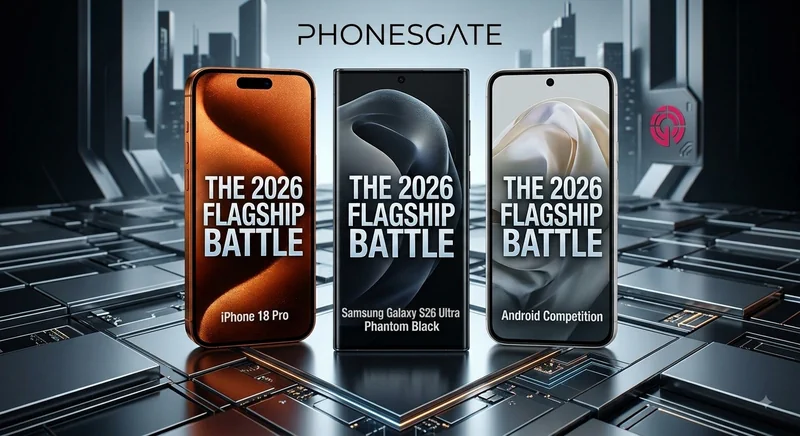
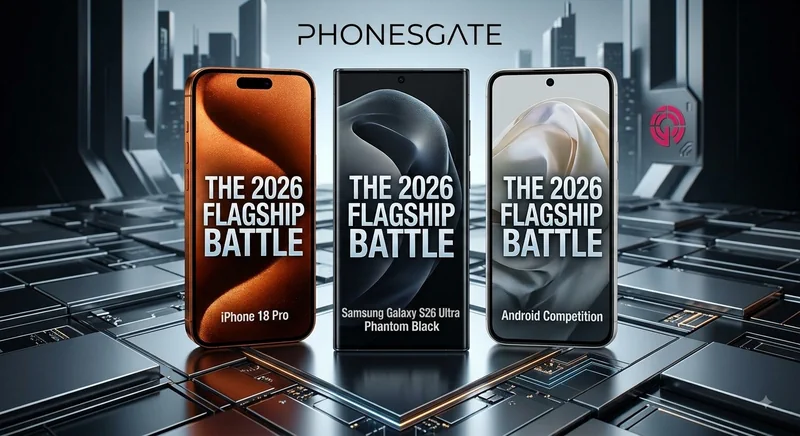
The battle for smartphone supremacy has reached its highest peak in 2026. With Apple unveiling the iPhone 18 Pro alongside heavyweight Android contenders like the Samsung Galaxy S26 Ultra and Google Pixel 11 Pro, consumers face one of the most critical tech buying decisions of the decade.
This year's competition isn't just about incremental camera megapixels or marginally brighter screens—it is an architectural war defined by 2nm silicon vs. 3nm refinement, variable aperture optics, under-display biometrics, and deeply integrated on-device Artificial Intelligence.
At phonesGATE, we break down how the iPhone 18 Pro stacks up against the Android elite to determine which flagship deserves your investment.
Key takeaway
Discover the ultimate 2026 smartphone showdown: iPhone 18 Pro vs. the Android competition (Galaxy S26 Ultra, Pixel 11 Pro). Explore 2nm A20 Pro chips, variable aperture cameras, and on-device AI.
Head-to-Head Specification Comparison
Feature / Spec Apple iPhone 18 Pro / Pro Max Samsung Galaxy S26 Ultra Android Competitors (Pixel 11 Pro / Xiaomi 16 Pro) Processor Apple A20 Pro (2nm TSMC) Snapdragon 8 Elite Gen 5 for Galaxy (3nm) Tensor G6 / Snapdragon 8 Elite Gen 5 Display 6.3" / 6.9" LTPO+ Super Retina XDR, Smaller Dynamic Island 6.9" Dynamic AMOLED 2X, 2600+ nits, Gorilla Glass Armor 2 6.3" - 6.8" LTPO OLED, 120Hz Biometrics Under-Display IR Face ID + Compact Dynamic Island Ultrasonic In-Screen Fingerprint Optical / Ultrasonic In-Screen Fingerprint Main Camera 48MP Wide with Variable Aperture (f/1.4 - f/4.0) 200MP Main (f/1.4) + 50MP Periscope (5x) + 50MP UW 50MP / 1-inch type primary sensors Cellular Modem Apple C2 Custom Modem Qualcomm Snapdragon X80 / Integrated Modem Integrated Qualcomm / Tensor Modems Battery & Charging Up to 5,567 mAh (Pro Max eSIM), MagSafe 5,000 mAh, 60W Wired / Qi2 Wireless 5,000–5,500 mAh, Up to 90W+ Fast Charging OS & AI iOS 20 with Apple Intelligence 2.0 Android 16 with One UI 8 & Galaxy AI Android 16 with Advanced AI Workflows
1. Silicon Supremacy: Apple A20 Pro (2nm) vs. Snapdragon 8 Elite Gen 5
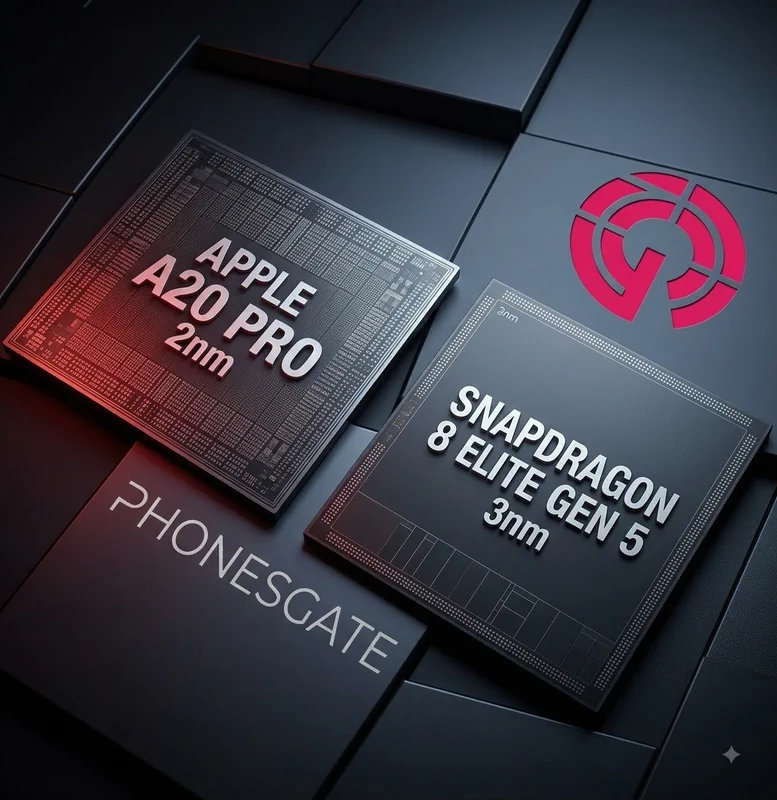
The defining hardware milestone of 2026 is Apple's transition to TSMC's N2 (2nm) process node for the A20 Pro chip.
5 min read
Apple coverage from PhonesGate. Published Aug 11, 2026.
- The Apple Advantage: The A20 Pro delivers up to a 15% boost in processing speed and a 30% reduction in power consumption compared to previous generations. Coupled with Apple's custom C2 5G modem, the iPhone 18 Pro achieves unprecedented energy efficiency and thermal management.
- The Android Counter: The Snapdragon 8 Elite Gen 5 powering top Android flagships utilizes an ultra-refined 3nm architecture. While Qualcomm's custom Oryon CPU cores push raw multi-thread clock speeds to rival desktop performance, Apple's 2nm efficiency edge gives the iPhone 18 Pro better sustained performance during heavy gaming and on-device AI workloads.
2. Camera Evolution: Variable Aperture Optics vs. Megapixel Dominance
Camera philosophy in 2026 has split into two distinct paths:
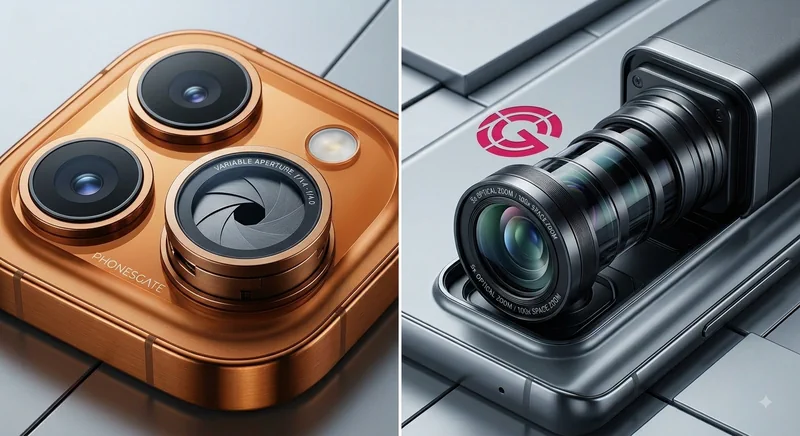
- iPhone 18 Pro (Optics Precision): Apple introduces a physical variable aperture lens on the primary 48MP Fusion camera. This gives creators photographer-grade hardware control over light intake and depth of field, dramatically reducing overexposure in harsh lighting and delivering natural, DSLR-like bokeh without relying solely on portrait software processing.
- Android Competitors (Sensor Density & Zoom): Android flagships continue to rely on massive raw sensor resolution. Samsung’s 200MP sensor combined with dual 50MP periscope zoom lenses offers superior long-distance focal capabilities (10x to 100x digital crop), whereas Xiaomi's 1-inch type sensor leads in raw light-gathering surface area.
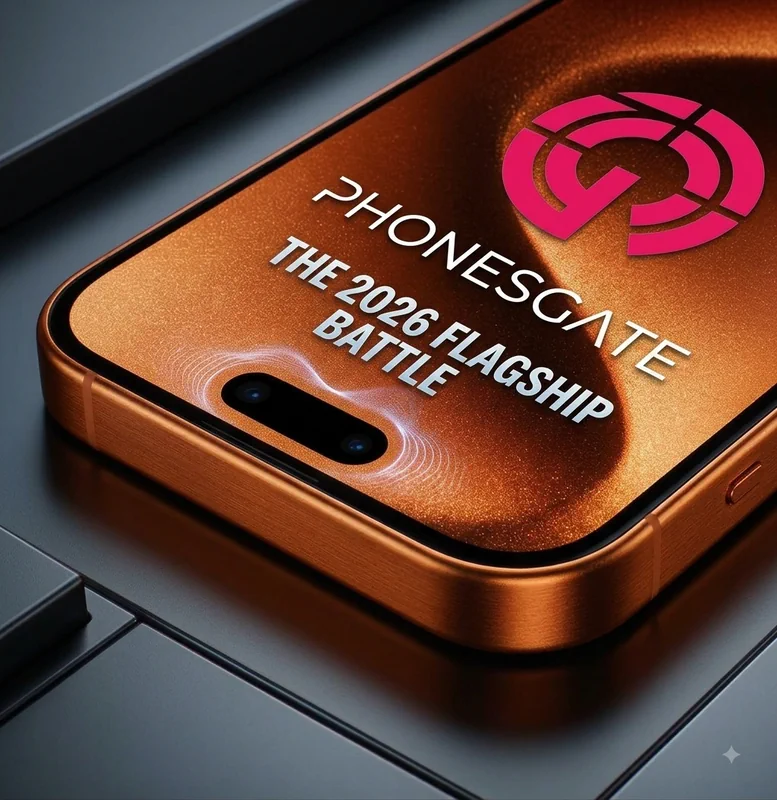
3. Design & Display: The Under-Display Revolution & Deep Orange Finish
For years, the Dynamic Island dominated Apple's front panel design. The iPhone 18 Pro marks a major structural evolution:
- Under-Display Face ID: By moving infrared sensors beneath the LTPO+ panel, Apple has shrunk the Dynamic Island by over 35%, drastically increasing active screen real estate without sacrificing TrueDepth security.
- Android Anti-Reflective Glass & Clean Punch-Holes: Android flagships maintain minimal single-hole punch designs paired with advanced anti-reflective glass coatings (such as Gorilla Glass Armor 2), providing exceptionally clean optics under direct sunlight.
4. On-Device AI & Software Ecosystem
In 2026, AI is no longer an add-on—it is the core operating layer.
- Apple Intelligence (iOS 20): Deeply integrated at the silicon level, Apple leverages the A20 Pro's upgraded Neural Engine for local generative video processing, contextual memory retrieval, and real-time offline language translation—all strictly secured on-device.
- Galaxy AI & Android Workflows (Android 16): Android offers broader cross-app integration and more flexible cloud-assisted productivity tools, making multi-tasking and complex automation smoother for power users.
The Verdict: Which Flagship Wins in 2026?
- Choose the iPhone 18 Pro / Pro Max if: You want unmatched battery longevity (2nm A20 Pro), professional camera optics with variable aperture, seamless ecosystem longevity, and high resale value.
- Choose an Android Flagship (Galaxy S26 Ultra / Pixel 11 Pro) if: You demand extreme telephoto zoom, ultra-fast charging speeds, an unobstructed display design, and open AI multitasking.