

POCO is preparing to launch a phone that looks less like a traditional “flagship killer” and more like a full-scale entertainment flagship. The POCO F9 Ultra is scheduled for a global launch on September 1, 2026, and the company has already confirmed a combination of hardware that immediately separates it from most mainstream Android phones: Snapdragon 8 Elite Gen 5, an 8,050mAh battery, 100W wired charging, 50W wireless charging, a 185Hz AMOLED display and a Bose-tuned speaker system with an independent subwoofer.
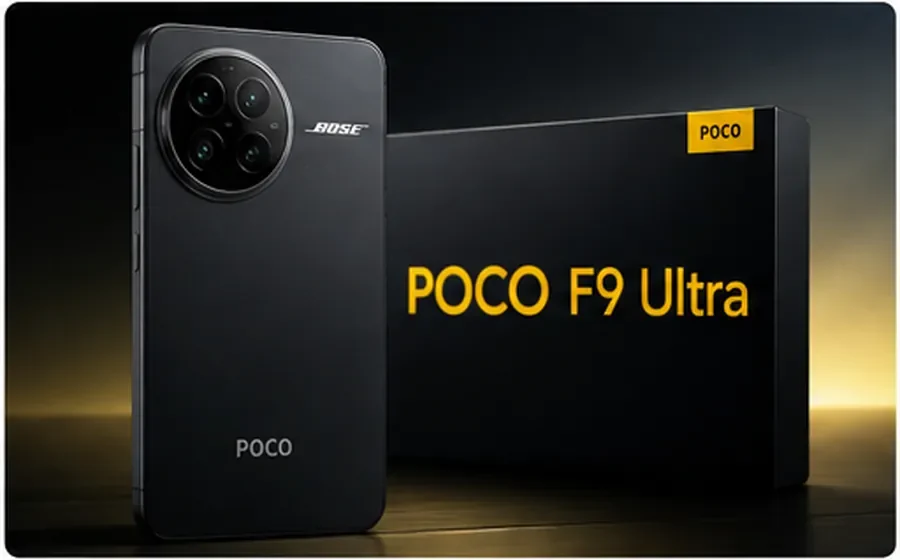
Those are not minor generational updates. Together, they suggest POCO is trying to expand the F-series beyond its familiar value-performance identity. The F9 Ultra appears designed for people who care about sustained gaming, battery endurance, fast charging and media consumption as much as benchmark numbers.
The important detail is that most of these specifications are already listed on POCO’s official global launch page. That means we do not need to build the story around leaks. We can focus instead on what the confirmed hardware could mean in real use — and where the marketing claims still need independent testing after launch.
Key takeaway
POCO F9 Ultra launches globally on September 1 with Snapdragon 8 Elite Gen 5, an 8,050mAh battery, 100W wired and 50W wireless charging, a 185Hz AMOLED display and Bose-tuned stereo speakers with an independent subwoofer.
Snapdragon 8 Elite Gen 5 puts performance at the center
POCO has confirmed that the F9 Ultra will use Qualcomm’s Snapdragon 8 Elite Gen 5. The company is also advertising an AnTuTu score of 4,165,108. That is an attention-grabbing number, but context matters: the result comes from POCO Internal Labs, using AnTuTu Benchmark V11.1.1 at an ambient temperature of around 25°C. It should therefore be treated as a manufacturer benchmark, not an independent PhonesGate result.

Even with that caveat, the choice of chipset tells us exactly where POCO wants this phone to sit. The Ultra is not being positioned as a mid-range device with one or two flagship components. It is being positioned as a top-tier performance phone that should have enough CPU and GPU headroom for demanding games, heavy multitasking and long-term use.
7 min read
PhonesGate coverage from PhonesGate. Published Aug 31, 2026.
The real question after launch will not be whether the processor is fast. We already expect that. The more meaningful test will be sustained performance: how much speed the phone can maintain after 20, 30 or 60 minutes of gaming, how aggressively it manages temperature, and how much battery it consumes while doing so.
185Hz is extreme — but only useful when the rest of the system keeps up
The F9 Ultra’s display supports a maximum refresh rate of 185Hz. POCO also promotes an up to 185FPS gaming experience in selected games under its internal test conditions. The company itself notes that actual frame rate can vary depending on the title, graphics settings, software version, network conditions and temperature.
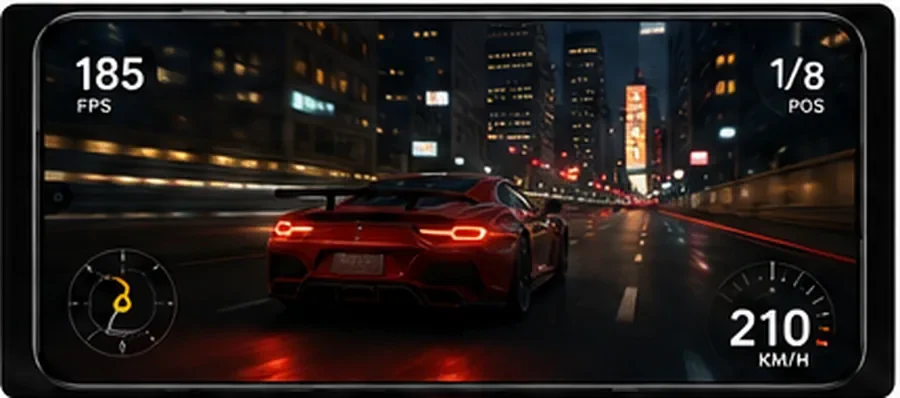
That distinction is important. A 185Hz panel does not automatically make every game run at 185FPS. Many games enforce their own frame-rate caps, and thermals can become the limiting factor long before the screen reaches its maximum refresh rate.
Still, there is a real advantage to having refresh-rate headroom. Competitive titles that support very high frame rates can feel more responsive, while touch interactions and scrolling can also benefit from a faster panel. For a device that is clearly being marketed toward performance enthusiasts, 185Hz is a logical — if aggressive — specification.
The 8,050mAh battery may matter more than the benchmark
The most practical specification may be the 8,050mAh typical battery capacity. POCO states that this capacity is exclusive to the F9 Ultra within the F9 series. That is a very large battery for a global flagship-class smartphone, especially one built around a top-end processor and high-refresh-rate display.
A large battery changes the experience in ways benchmark numbers cannot. High frame rates, maximum brightness, 5G connectivity, navigation, hotspot use and heavy camera processing can drain smaller flagship batteries quickly. POCO is effectively attacking that problem with brute-force capacity.
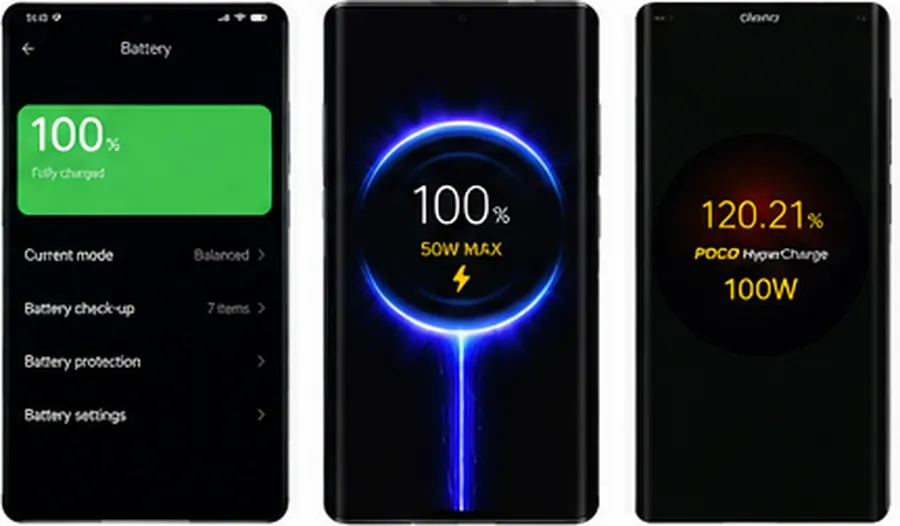
The charging system is equally ambitious. POCO lists 100W wired HyperCharge and 50W wireless HyperCharge. Wireless chargers are sold separately and availability can vary by market, but the inclusion of 50W wireless charging is meaningful because it removes one of the compromises that often separates performance-focused value phones from more expensive premium flagships.
This combination — huge battery plus very fast wired and wireless charging — could be one of the strongest reasons to buy the F9 Ultra if real-world endurance matches the promise.
The Bose subwoofer is the feature that makes this phone different
Smartphone audio is usually described with familiar phrases: dual speakers, stereo sound, Dolby Atmos or tuned audio profiles. POCO is going further with the F9 Ultra. The official launch page confirms Sound by Bose, symmetrical stereo speakers and an independent subwoofer.
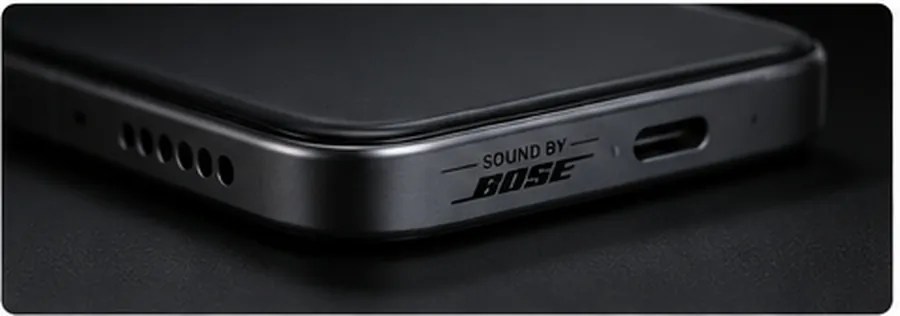
The word “independent” is important because POCO is not simply talking about software bass enhancement. It is presenting the F9 Ultra as having a dedicated audio component intended to extend low-frequency output beyond what conventional phone speakers normally achieve.
That could matter more than it sounds. Smartphones have become excellent displays for video and gaming, but their audio systems remain physically constrained. If POCO’s dedicated subwoofer can add audible low-end impact without creating distortion or excessive vibration, the F9 Ultra could offer a genuinely different media experience.
It will also be interesting to see how Bose’s tuning affects dialogue clarity, stereo separation and balance at higher volume. A louder phone is not automatically a better-sounding phone. The quality of the tuning will matter as much as the presence of extra hardware.
Dark Cherry gives the Ultra its own identity
POCO has already shown the F9 Ultra in a Dark Cherry finish. The company describes it as a deep cherry color with a textured glass-fiber surface, large rounded corners and a premium matte appearance. That design direction is more restrained than some of the aggressively styled gaming phones on the market.
This is a smart choice. The F9 Ultra clearly targets gamers and power users, but POCO does not need to make it look like a gaming accessory. A premium, relatively mature exterior gives the phone a better chance of appealing to buyers who want the performance without an overly “gamer” aesthetic.
What POCO still needs to prove on launch day
The confirmed hardware is unusually strong, but there are still important questions that only independent testing can answer. First is thermal performance. A Snapdragon 8 Elite Gen 5 running high-frame-rate games can generate significant heat. Second is actual endurance at 185Hz. An 8,050mAh battery is enormous, but display refresh rate and sustained GPU load can consume power quickly.
Third is the audio system. The independent subwoofer is one of the F9 Ultra’s most distinctive features, but we need to hear whether it produces real bass extension or simply stronger vibration. Finally, pricing will determine whether this is still a classic POCO value proposition or a true premium flagship carrying premium pricing.
There are also several details that should not be assumed before the full launch. POCO’s global teaser page does not yet provide every camera specification, complete display resolution, final RAM/storage combinations or exact regional pricing. PhonesGate will keep those details separate until POCO publishes the full product page.
PhonesGate take
The POCO F9 Ultra looks like a shift in strategy. Previous F-series phones built their identity around delivering flagship-class speed for less money. The F9 Ultra still appears performance-first, but the 8,050mAh battery, 50W wireless charging, 185Hz display and independent Bose subwoofer show a broader ambition.
It is not simply trying to win a benchmark comparison. It is trying to become the phone that a gamer or heavy media user can keep using for hours without immediately reaching for a charger or headphones.
If POCO delivers strong sustained performance and prices the phone aggressively, the F9 Ultra could be one of the most interesting Android launches of the year. The hardware is already unusual enough to get attention. Now POCO has to prove that those specifications work together as a coherent flagship experience rather than as isolated headline numbers.
Sources
Confirmed specifications and launch details in this article are based on the official POCO F9 Series global launch page published by Xiaomi/POCO. POCO explicitly identifies the AnTuTu result and 185FPS gaming figures as internal-laboratory results, and PhonesGate has preserved those qualifications in this analysis.
Image note: article visuals are original PhonesGate editorial illustrations inspired by officially published POCO F9 Ultra product references. They are not official POCO press photographs.