

The Galaxy Z Fold8 Ultra is the kind of Samsung phone that exists to answer a very specific question: can a foldable finally replace both your premium phone and your compact tablet without feeling like a compromise? Samsung’s latest Ultra-branded foldable is clearly designed to say yes. It pushes harder on premium materials, multitasking, camera ambition and overall polish, aiming at buyers who want the biggest possible Galaxy experience in a device that still folds shut and fits in a pocket.
That is why the Galaxy Z Fold8 Ultra matters. Samsung is no longer selling foldables as futuristic experiments. It is selling them as serious flagship tools. And in that context, the Fold8 Ultra has to be judged by a higher standard than older Z Fold models. It is not enough for it to be clever. It has to be practical, comfortable, powerful and dependable enough to justify a premium price in a market where normal slab phones have become extremely polished.
In this PhonesGate review, we take a close editorial look at what the Galaxy Z Fold8 Ultra gets right, where Samsung still needs to improve, and whether this is the foldable that finally makes the category feel fully mature.
Key takeaway
Samsung’s Galaxy Z Fold8 Ultra pushes the company’s foldable strategy into true flagship territory with a larger-screen workflow, premium design and a more convincing Ultra identity.

Design and build: more polished, more purposeful
The first impression the Fold8 Ultra gives is confidence. It looks and feels like Samsung is no longer trying to merely refine the foldable formula by small steps. Instead, the company appears to be positioning this model as the foldable equivalent of an Ultra phone: premium, aspirational and clearly above the standard version in identity as well as pricing.
That branding matters because buyers in this segment are not just shopping for specifications. They are shopping for reassurance. They want to know that the hinge feels strong, the frame feels dense and expensive, and the overall product feels like something that can survive daily life rather than a fragile showpiece. Samsung’s foldables have been moving in this direction for years, but the Fold8 Ultra feels much closer to a truly mainstream flagship design language.
9 min read
Samsung coverage from PhonesGate. Published Aug 1, 2026.
What also stands out is how natural the device looks in everyday use. Closed, it still reads like a high-end phone. Opened up, it becomes a focused productivity screen. That versatility is the real design win. The Fold8 Ultra is not about the fold itself anymore. It is about what the fold unlocks.
Display experience: the reason to buy this phone
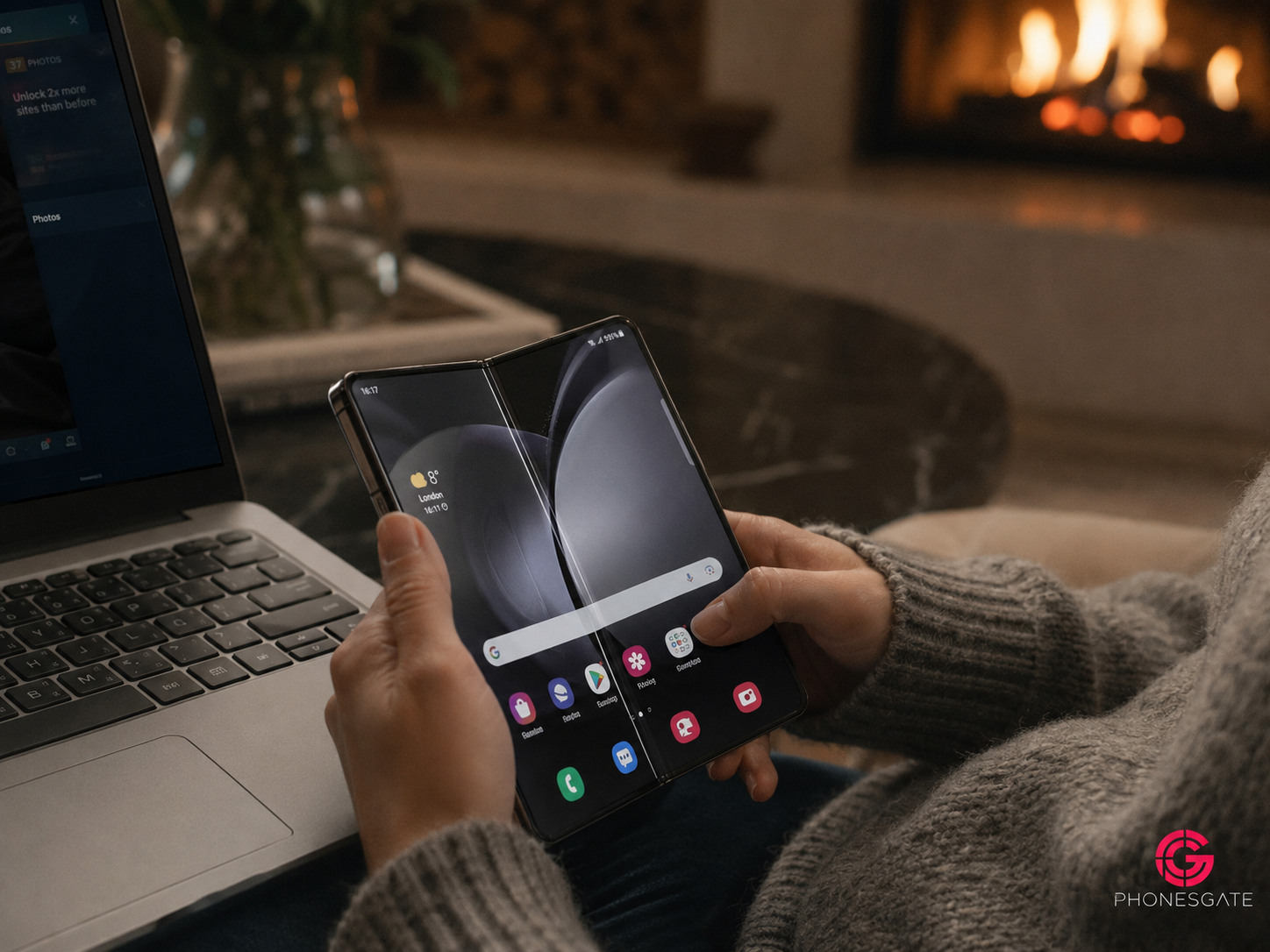
If you are considering the Galaxy Z Fold8 Ultra, the inner display is almost certainly the biggest reason. The whole appeal of this class of device is that it can move from normal smartphone tasks to tablet-style usage in seconds. Reading long articles, reviewing photos, handling split-screen apps, replying to messages while checking email, or watching video content all feel more comfortable on a larger canvas.
Samsung understands that, and the Fold8 Ultra is at its best when the bigger display is treated as more than a novelty. This is where the product starts to separate itself from normal premium phones. A conventional flagship can be faster, lighter or cheaper, but it cannot recreate the feeling of having a compact workstation in your hand.
The crease will still matter to some buyers, but in practical use it tends to matter less than many people expect. Once the display is on and real tasks begin, attention shifts toward the benefits of extra space. For multitasking, maps, messaging, documents and streaming, that extra room genuinely changes how the device feels from day to day.
Performance and multitasking: where Ultra branding has to mean something
An Ultra device cannot afford to feel slow, hesitant or thermally limited during demanding use. Samsung knows that the audience for a foldable of this size is likely to be the same audience that keeps many apps open, edits content, jumps between chat windows and browser tabs, and expects the phone to function like a pocket computer.
This is where the Fold8 Ultra’s positioning makes sense. Samsung has spent years improving One UI for larger screens, and that work is far more important than raw silicon marketing. On a normal phone, extra performance often just means a faster benchmark result. On a foldable, it means smoother multi-window behavior, more reliable app continuity between the outer and inner displays, and a more convincing laptop-like workflow.
When Samsung gets this right, the Fold8 Ultra becomes one of the most useful devices in the Galaxy lineup. The larger panel finally feels matched with software that knows what to do with it. That is the difference between a fancy foldable and a premium productivity tool.
Cameras: better expectations, but also tougher competition
Samsung’s decision to frame this device as an Ultra immediately raises expectations for the camera system. Buyers hear the word “Ultra” and think of top-tier image quality, flexible zoom performance and cameras that can stand shoulder to shoulder with the best slab flagships. That is both an advantage and a risk.
The advantage is obvious: Samsung can now market the Fold8 Ultra as more than a multitasking device. It can position it as a true all-round flagship. The risk is that foldables still live within physical constraints. Thinner bodies, hinge engineering and space limitations mean it is harder to deliver the exact same camera hardware experience found in a large Ultra slab phone.
Even so, the Fold8 Ultra should still appeal to buyers who want strong camera versatility in a premium foldable. For many people, the real benefit is not whether it beats every camera phone on the market, but whether it is finally good enough that they no longer feel they are sacrificing imaging quality in exchange for foldable convenience. That balance is crucial, and Samsung appears much closer to achieving it than before.
Battery life and day-to-day practicality
Battery performance is one of the most important categories for any foldable because the device has to power a large inner display while also serving as a daily primary phone. Buyers are right to expect more than “acceptable” endurance at this price level. A phone like the Fold8 Ultra should feel reliable from morning to night, not like a showcase product that constantly needs managing.
The good news is that Samsung’s recent foldables have been getting better at energy efficiency, and that trend matters more than headline battery numbers alone. Software tuning, standby optimization, display management and processor efficiency all contribute to whether a foldable feels trustworthy in real life.
The practical experience is likely to depend heavily on how you use the inner screen. If you spend hours multitasking, reading and watching content on the larger display, battery life will naturally drop faster than on a normal phone. But for many users, that trade-off is acceptable because the device is replacing another screen they would otherwise carry.
Software and Galaxy AI: the part that makes or breaks the experience
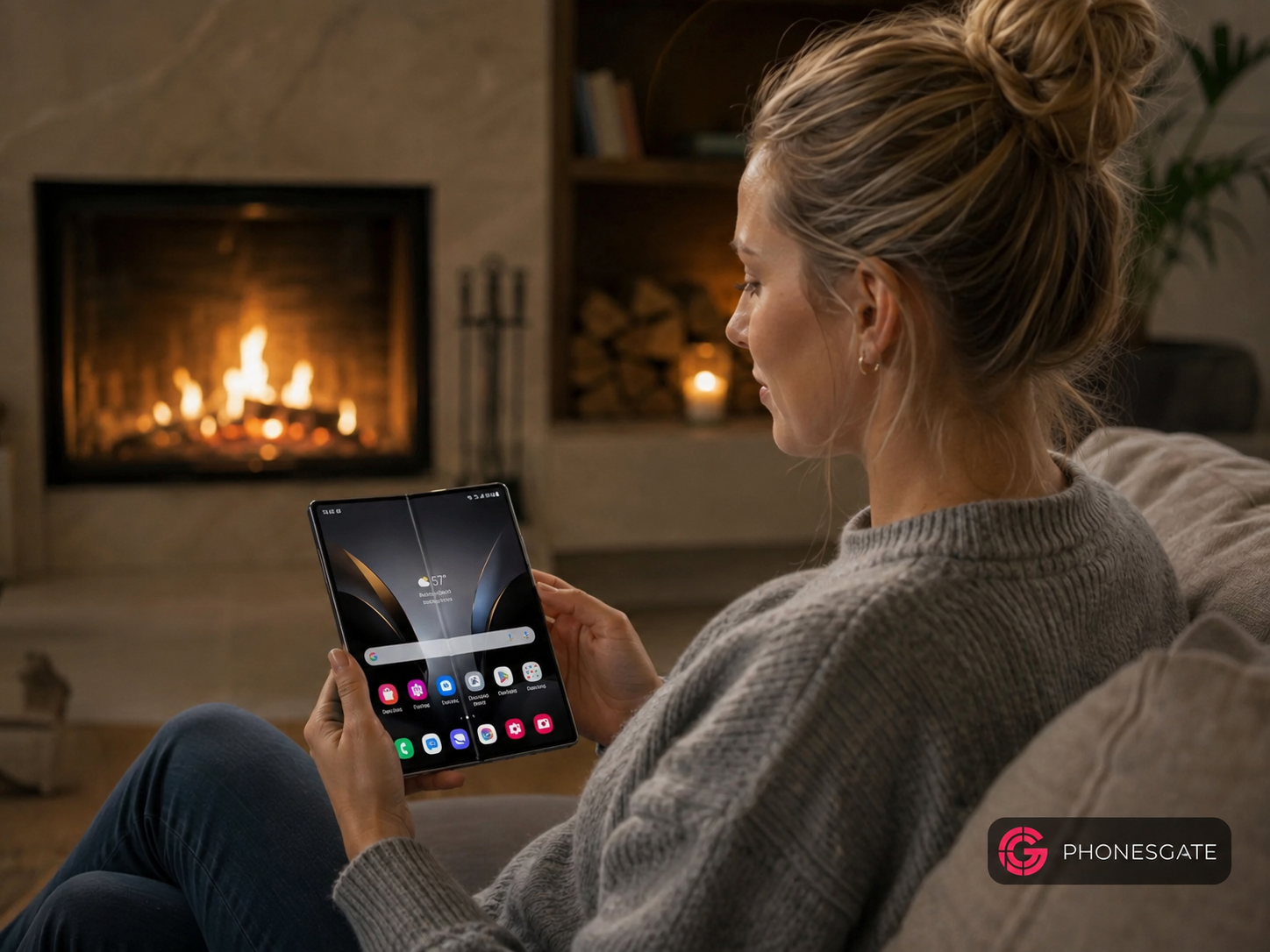
Foldables live or die by software. Samsung has long had an advantage here because it has spent more time than most Android brands building interface habits around larger screens. The Fold8 Ultra benefits directly from that history. App continuity, taskbar behavior, floating windows and side-by-side workflows are not side features. They are the foundation of the whole product.
Galaxy AI features also fit particularly well on a foldable. Summaries, translations, note tools, writing assistance and visual search workflows simply make more sense on a big screen where you can see context more easily. That does not mean every AI feature is essential, but it does mean the Fold8 Ultra is one of the better showcases for Samsung’s software direction.
In other words, this device is at its best when Samsung treats the extra display space as an opportunity to reduce friction. If that happens consistently, the Fold8 Ultra becomes one of the smartest devices in Samsung’s ecosystem, not just one of the most expensive.
PhonesGate take: this is the most convincing Samsung foldable yet
The Fold8 Ultra feels important because it is trying to cross a psychological line for buyers. Older foldables often felt like enthusiast products that required compromise. This one feels much closer to a premium flagship that happens to fold rather than a foldable that needs to be excused.
That is a major shift. It means Samsung is not merely iterating; it is trying to normalize the high-end foldable category. If you already love the idea of carrying one device for work, reading, media and messaging, the Fold8 Ultra is probably the strongest Samsung argument yet. It looks more confident, seems more purpose-built and better matches the expectations that come with the Ultra label.
The only real caution is price. Foldables remain expensive, and buyers need to be honest about whether they will use the inner display enough to justify the premium. If your daily routine mostly revolves around quick messaging, casual photos and short social sessions, a normal flagship may still make more sense. But if you genuinely want a phone that behaves like a compact productivity machine, the Fold8 Ultra becomes much easier to defend.
Who should buy the Galaxy Z Fold8 Ultra?
- Buy it if you want the biggest and most premium Samsung mobile experience, and you will actually use the inner screen for multitasking, reading, media and productivity.
- Buy it if you are a power user who likes laptop-style workflows, split-screen apps and the flexibility of a tablet-like canvas in your pocket.
- Skip it if you mostly want the absolute best value or if you rarely do anything that benefits from a larger display.
- Skip it if you prefer the simplest possible phone experience and would rather prioritize lower weight, lower cost and easier one-handed handling.
Final verdict
The Samsung Galaxy Z Fold8 Ultra looks like the foldable Samsung fans have been waiting for. It pushes the series closer to true flagship completeness by pairing a more confident design with a larger-screen workflow that finally feels mature, useful and clearly differentiated. It is still a premium niche product in price, but it is much less of a niche product in purpose.
For buyers who have been waiting for a foldable that feels less experimental and more fully realized, this is one of Samsung’s strongest efforts yet. If the price fits your budget and you know you will take advantage of the inner screen, the Galaxy Z Fold8 Ultra is not just interesting. It is genuinely compelling.